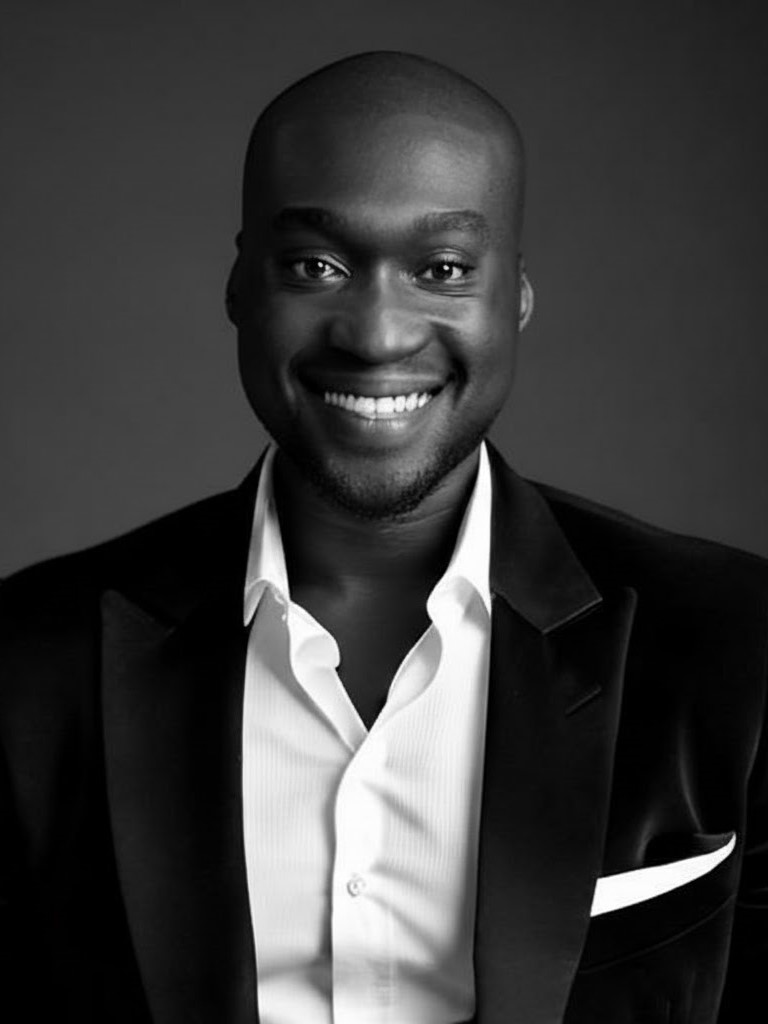
Last Tuesday I was on a call about government housing contracts in Iowa while my team in the Philippines was debugging our rental tech platform and my operations manager in Ghana was sending photos of a school we're building. It was 9 AM in Phoenix. I hadn't had coffee yet.
This is what running multiple businesses actually looks like. Not the LinkedIn version where everything is "synergy" and "passion projects." The real version, where your inbox has 47 unread threads and you're context-switching between a VA contract and a nonprofit grant application in the same hour.
I run seven ventures right now. 3S handles government and corporate housing, and holds a GSA schedule contract. 3S Housing builds residential and mixed-use developments in Ghana and the US. Kasama Farms is a sustainable agriculture operation in Ghana. Furnished Unfurnished is a rental tech platform I'm building from scratch. I'm an investor in Aoska, a Muay Thai gym in Phuket, and an advisor to Dwellink. The Nehmiyah Foundation does education and care work in Ghana and the Philippines. No venture capital. A distributed team across the US and Philippines. Faith at the center of all of it.
People tell me this sounds crazy. I think what's crazy is putting all your income, purpose, and impact into one thing and calling it safe.
Why 2026 is the year this model actually works
More Americans than ever say they want to start a business of their own. But the bigger shift isn't that more people want to start something. It's that the cost of running something has collapsed.
Five years ago, running seven ventures would have required seven office leases, seven full management teams, seven sets of overhead that would bankrupt you before year two. Now? My bookkeeper is in the Philippines. My developer works across three of my ventures simultaneously. Project management runs through the 3S Portal and Notion. I have AI handling first-pass email triage and government contract scanning every week.
The multi-venture entrepreneur isn't a new concept. Branson's been doing it for decades, but Branson had billions. What changed is that a portfolio entrepreneur can now operate at real scale on a lean startup budget. The tools finally caught up to the ambition.
The actual playbook for running multiple ventures
I won't pretend I have this perfectly figured out. I've had weeks where I dropped balls badly. But here's what works more often than it doesn't.
Systems before hustle. Every one of my ventures runs on the same operational backbone: the 3S Portal for communication and tracking, Notion for documentation. When a new team member joins any venture, the onboarding looks almost identical. That consistency is what lets me move between contexts without my brain melting.
Hire globally, manage locally. My team in the Philippines isn't cheap labor. They're skilled professionals who happen to live in a different timezone, and that timezone gap is actually an advantage. Work gets done while I sleep. I wake up to completed tasks. My executive assistant, bookkeeper, and several operations people are all based there. Honestly, they run tighter processes than most US teams I've worked with.
Automate the boring stuff. I have systems that scan SAM.gov weekly for government contracts matching our industry codes, filter them by set-aside type, and draft initial responses. My email gets triaged, categorized, and converted into task lists before I open my inbox. Every hour I spend on automation saves me roughly five hours a month. Probably more.
Know your role in each venture. This one took me a while to learn. I'm not the day-to-day operator in all seven businesses. In some I set strategy. In others I fundraise. In one I'm purely advisory. If you're trying to be the hands-on CEO of seven companies at the same time, you will burn out or you will do all seven badly. Probably both.
Diversification vs. distraction (most people get this wrong)
This is where the multi-venture entrepreneur model falls apart for a lot of people. They see someone running multiple businesses and think the takeaway is "do more things." That's the wrong lesson.
Every venture I run connects back to one of two themes: housing or community impact. 3S, Furnished Unfurnished, and the government contracts all orbit the same industry. I know the same landlords, the same federal agencies, the same market. What I learn in one feeds directly into the others. Kasama Farms and Nehmiyah both serve communities in the Global South. The relationships and logistics overlap significantly.
If someone came to me wanting to run a property management company, a SaaS tool, a restaurant, and a clothing brand all at once, I'd tell them to pick two and kill the rest.
Diversification works when your ventures share customers, knowledge, or infrastructure. When they don't share any of those things, you're just splitting your attention and calling it a business strategy.
My test is simple: does this new venture make the ones I already run stronger? If not, I pass. No matter how good the opportunity looks on paper.
Why faith is in the mix
I'll be direct about this because I think people dance around it too much. My faith isn't a side note in my business life. It's how I make decisions.
When I'm evaluating a new venture, the first question isn't about the revenue model. It's whether I'm supposed to be doing this at all. That filter has kept me out of more bad deals than any financial analysis. It's also why running a nonprofit alongside for-profit businesses doesn't feel contradictory to me. I don't see purpose and profit as separate tracks. They're the same work pointed in different directions.
You don't have to be a person of faith to run a multi-venture portfolio. But you need something beyond money pulling you forward, because the logistics alone will grind you down if the "why" isn't strong enough.
Before you add another venture, answer these honestly
- Does it share customers, knowledge, or infrastructure with what you already run?
- Can you describe your role in it in under 10 words, and does that role stop short of "everything"?
- Could it survive two weeks without you? If not, what needs to be built first?
- Are you adding it because it makes your portfolio stronger, or because you're restless?
- If it fails, do your other ventures stay standing?
If you're hedging on more than one of those, you don't need another venture. You need better systems in the ones you have.
Where this is going
The single-career, single-company path isn't dead. But it's no longer the only serious option. The remote team infrastructure, the automation tools, the global talent pools that exist today make it realistic for one person to build and run a portfolio of businesses that would have required a private equity firm ten years ago.
Realistic and smart aren't the same thing, though. The multi-venture entrepreneur who actually makes this work in 2026 isn't the one who starts the most companies. It's the one who builds the best systems, hires the right people regardless of geography, automates anything that doesn't require human judgment, and says no to the ventures that don't fit.
I'm still learning how to do this well. Every week shows me something I need to fix. But I'd rather be figuring it out across seven ventures that matter than optimizing one that doesn't.